
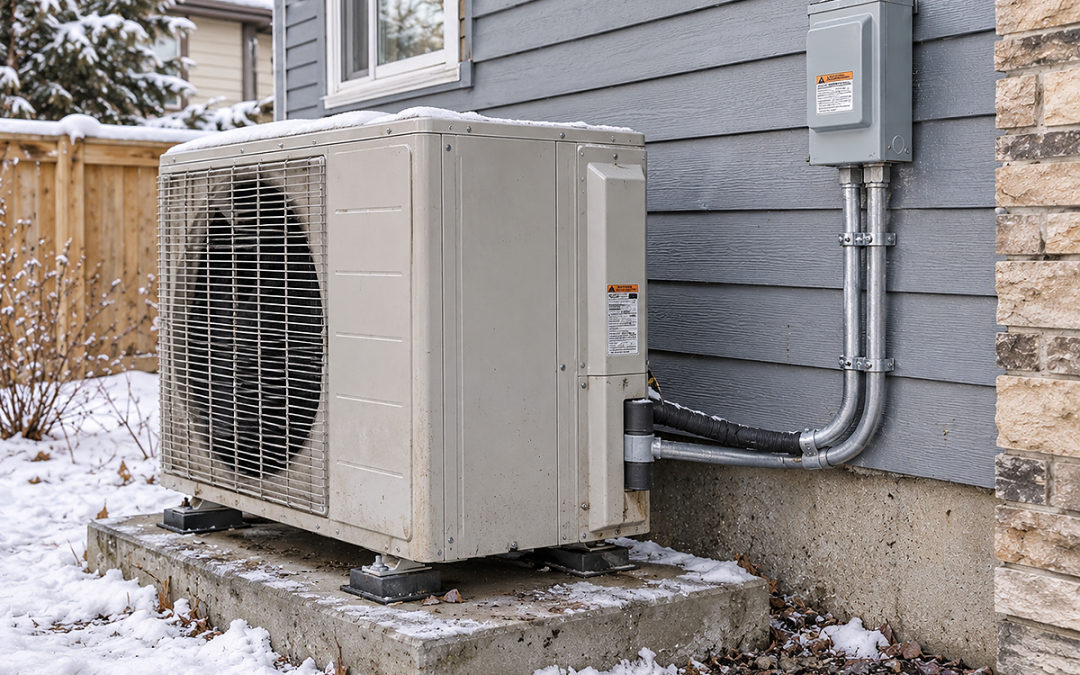
A heat pump installer can put an outdoor unit on a pad in a few hours, but the electrical work behind it decides whether the system runs well for years. The heat pump electrical requirements for a Calgary home come down to four things: the circuit, the disconnect, the capacity of your panel, and what happens when the backup heat comes on.
Getting those four right before installation day keeps the project on schedule and avoids a second visit.
Heat Pump Electrical Requirements Start With The Nameplate
Every heat pump carries a nameplate that lists a minimum circuit ampacity and a maximum overcurrent protection size. The electrician sizes the wire to the first number and the breaker to the second, which is why a heat pump circuit cannot be copied from the unit that came before it. A larger replacement unit often needs a different wire size and breaker.
Most outdoor units run on a dedicated 240-volt circuit. Indoor air handlers and any electric backup heat add their own circuits, and each is sized from its own nameplate.
The Disconnect Sits Near The Outdoor Unit
Equipment like this needs a weatherproof disconnect close to the outdoor unit so a technician can shut the power off at the unit while working on it. The disconnect has to be rated for the load and sit where it can be reached, not behind a fence or a stack of firewood.
Where the unit goes affects the cost of the electrical work. A long run from the panel to the far side of the house means more wire, more conduit, and more labour.
Your Panel Has To Have Room
Adding a heat pump can push a home past what its service was sized for, especially when it joins an EV charger, a hot tub, or a finished basement. Before any wiring is run, a load calculation shows whether the existing service has capacity or whether it needs an upgrade. We explain how that works in what a load calculation is for a Calgary home.
In Calgary, the City requires a qualified electrician or engineer to complete the load calculation when a rowhouse adds a heat pump, an air conditioner, or similar equipment. The same careful approach is the right one for any home. If the answer is that the service is tight, our electrical panel upgrade service handles it.
Backup Heat Changes The Math
Cold-climate heat pumps work well through most of a Calgary winter, but many systems pair them with electric backup heat for the coldest days. That backup can draw a lot of current when it runs, and it needs its own circuit. A system that looks modest on paper can add a large load once the backup strips are counted.
Ask your installer what backup heat is included and how many amps it adds. Backup heat is one of the loads that decides whether a panel has room.
Protecting The Equipment
A heat pump has sensitive electronics in both the outdoor unit and the air handler, and power surges can damage them. Whole-home surge protection at the panel is a sensible companion to any new system, and our whole-home surge protection post explains how it works.
Larger installations may also involve our power equipment installation service, which covers the wiring for major equipment of this kind.
Where The Outdoor Unit Goes
The outdoor unit needs clear space around it for airflow and service, and in Calgary it also needs to sit where snow and ice will not bury it. Placement affects the wiring, since a unit on the far side of the house means a longer run and a more involved route for the conduit. Settling on the location with your installer before the electrical plan is final avoids moving a disconnect later.
Permits And Who Does The Work
New wiring in Calgary needs an electrical permit. A licensed electrician handles the permit, completes the installation, and arranges the inspection. Our residential electrical permits post explains how the process works.
Coordinate the schedule with your heating contractor so the electrical rough-in is done before the unit arrives. Waiting until the day of installation is how a one-day job becomes a three-day job.
What Drives The Cost Of The Electrical Side Of A Heat Pump
Distance is the first factor. The farther the outdoor unit sits from the panel, the more wire, conduit, and labour the circuit needs, and a long run may call for heavier wire to hold voltage. Panel capacity is the second. If the existing service has room, the work is a new breaker and circuit. If it does not, a panel or service upgrade joins the project.
Backup heat is the third. An electric backup strip needs its own circuit and adds a large load. The disconnect, the permit, and the inspection are the last pieces. Crew prices the job at a flat rate for the defined scope, and any hidden condition found behind a wall is quoted and approved separately before work continues.
From First Call To Final Inspection
The process starts with a visit to see the panel, the planned unit location, and the route for the wire. A load calculation shows whether the service can carry the new equipment. A permit is arranged, and the electrical rough-in is scheduled to be finished before the unit arrives.
On installation day, the electrician connects the disconnect, runs the circuit, and terminates it at the equipment according to the nameplate. After the heating contractor completes the installation, the inspection is arranged. A final test confirms that everything operates as it should.
Mistakes That Delay A Heat Pump Installation
Ordering the unit before checking the panel is the first. If the service is full, the project stops until an upgrade is done. The second is wiring from the old equipment’s size. A new unit has its own nameplate, and it governs. The third is choosing an outdoor location that suits the installer but leaves a long, exposed wire run.
Another is overlooking snow and ice. In Calgary, a unit mounted too low can get buried, and a disconnect that is hard to reach in winter is a problem for service.
Frequently Asked Questions
Do I Need A New Electrical Panel For A Heat Pump?
Not always. It depends on how much capacity your service has left. A load calculation answers the question, and it should happen before the unit is ordered.
Can I Install A Heat Pump Circuit Myself?
Wiring for a heat pump involves a dedicated circuit, a disconnect, and a permit. A licensed electrician should do the work.
How Big A Breaker Does A Heat Pump Need?
The nameplate on the unit lists the minimum circuit size and the maximum breaker size, and the electrician follows it.
Do Heat Pumps Work In Calgary Winters?
Cold-climate models are built for low temperatures, and many systems pair them with backup heat for the coldest days. Ask your installer how the unit performs at the temperatures you see.
Does A Heat Pump Need Its Own Circuit?
Yes. The outdoor unit and the air handler each have their own requirements, and any electric backup heat adds another circuit.
Planning The Electrical Side First
If you are comparing heat pump quotes, ask each contractor who is doing the electrical work and what it includes. Then talk to us before you sign anything. Our residential electrical services cover the circuit, the disconnect, the panel, and the permit, and our Calgary service area page lists the communities we work in.
Contact us for a flat-rate quote on the electrical side of your heat pump project.