by Talisee Carpenter | Oct 19, 2026 | Panel & Service Upgrades
Chestermere Lake was created as part of an irrigation system, and the summer cabins that grew up around it were built for a few warm months, not a full year. When a lake property becomes a full time home, the electrical system is usually the part that was never designed for the change. A Chestermere cottage electrical upgrade is mostly about matching the service, the wiring, and the winter loads to the way the house is lived in now.
From Summer Cabin To Year Round Home
Leaseholders around the lake built cabins and spent the summer months there, and the cabin owners association, formed in 1959, arranged electricity and natural gas for them. Residents later pushed for long term leases and permanent homes, and by 1977 the lake had about 120 permanent homes, according to the City of Chestermere’s own history. Services installed for summer use were sized for summer loads. A property that has been renovated and expanded can look entirely modern from the outside while still running on a service that was never revisited.
What Full Time Living Adds To The Electrical Load
Year round occupancy adds winter heating, hot water demand every day, cooking and laundry, and often air conditioning or a heat pump. A finished basement, a heated garage, a hot tub, or an EV charger adds more. Each is manageable alone, but together they decide whether a 60 or 100 amp service is still enough. A load calculation completed by a qualified electrician answers that for the specific house, and our 100 amp versus 200 amp comparison helps frame what size service the finished home needs.
Wiring That Predates The Renovation
Older cabins can contain wiring that is older than the panel feeding it, along with circuits added by earlier owners over the years. Homes built from the mid 1960s into the 1970s may have aluminum branch wiring, and wiring from before about 1950 may still include knob and tube, so an inspection identifies which applies. When walls are open for insulation, a new bathroom, or a basement, the oldest circuits can be replaced during the same project as the panel work, which is more efficient than treating them as separate jobs months apart. Our electrical inspections service covers that review, and panel upgrades for basement development covers the capacity side of finishing a lower level.
Winter, Water, And Exterior Circuits
A cabin built for summer rarely has the circuits that winter demands. Heat trace cable on water lines needs its own protected circuit, heating equipment needs reliable supply, and exterior outlets, lighting, and any shoreline or outbuilding circuits need weatherproof installation with GFCI protection. These loads are seasonal, so an assessment done in summer can miss them, and they belong in the load calculation alongside the indoor equipment.
Assessing The Panel And Planning The Upgrade
A panel assessment checks the main breaker size, the condition of the breakers and the enclosure, signs of heat or corrosion, and how many spaces remain for new circuits. It belongs ahead of the renovation design, because capacity that turns out to be short midway through a project is far more disruptive to fix. Breakers that trip when a few appliances run together, a warm panel cover, or a service still marked 60 or 100 amps on a house that has been added onto are the usual signs, and our breaker capacity post explains them.
When an upgrade is the answer, our panel upgrade service brings better circuit organization, current breaker protection, and a labelled directory that makes later work easier. Owners adding smart controls to the same service can read our post on home automation in Chestermere.
Book your panel assessment and we will confirm whether the service matches how the house is used. We serve Chestermere and the wider areas we serve, and you can reach the team here.
by Talisee Carpenter | Oct 14, 2026 | Panel & Service Upgrades
A load calculation is the first step in most electrical projects that add equipment, and homeowners often hear the term for the first time partway through a quote. It adds up what a house can demand and compares that total with what the service can supply, so the result decides whether a new hot tub, EV charger, or generator fits on the existing panel. The City of Calgary’s homeowner permit rules say that load calculations must be completed by a qualified electrician, and for rowhouse projects that add a Level 2 EV charger, heat pump, air conditioner, hot tub, or battery storage it asks for a professional electrician or engineer to complete one. That is why this step appears early in a project.
What A Load Calculation Measures
The Canadian Electrical Code sets out the method. For a house it starts with a basic load tied to the home’s living area, then adds the demand of space heating and cooling, the range, the water heater, and large loads such as an EV charger or a hot tub. The total is compared with the rating of the service, commonly 60, 100, or 200 amps, and the difference is the headroom left for the next addition. Floor area is one input, but the equipment in the house matters just as much, which is why two homes of the same size can produce different results.
How The Numbers Get Counted
Not every load is counted the same way. Electric space heating has its own demand factors under Section 62 of the code, and where heating and air conditioning will not run together, only the larger of the two is added. EV charging equipment and hot tubs are counted at their full rating, while other loads, such as the range, receive demand factors because everything in a house does not run at its maximum at the same moment. Getting those factors right separates an accurate result from one that either oversells the panel or recommends more capacity than the house needs, which is why a guess from a photo of the panel label is not a substitute.
What A Panel Rating Does And Does Not Tell You
A panel marked 100 or 200 amps shows the maximum its main breaker allows, not the room left once existing circuits and equipment are counted. Two homes with the same panel can have very different headroom depending on the furnace, range, dryer, water heater, and any additions made over the years. Older panels often show less room than expected for the same reason, since a garage heater here and a charger there were added without anyone recalculating the total. Our breaker capacity post covers the signs that a panel is already running near its limit.
What The Result Means For Your Project
If the calculation shows room, the new circuit goes in as planned. If it comes back tight, there are usually two paths: upgrade the service, or add a load management device that reduces power to lower priority loads when the house nears its limit. Our permit and inspection guide outlines both options for a service that is maxed out, our load management service page and load shedding devices post compare them in more detail, and load management in Coventry Hills looks at the same question for homes in that neighbourhood.
The calculation comes before the quote because it sets the scope. Installing equipment on a guess can mean breakers that trip regularly, a panel found to be undersized after the new circuit is in, a second visit, and rework on the circuit just completed. An accurate number up front also shows how much headroom remains for the next addition.
Where A Generator Fits
A generator is sized with the same method applied to a different question: which circuits must keep running during an outage. The answer decides whether a unit covers the furnace, sump pump, and refrigeration or the whole house, and it prevents buying a unit that is too small for the circuits that matter or larger than the house needs. Our standby generator installation page covers how this feeds into sizing.
Book your load calculation before adding a hot tub, a generator, or any equipment that draws significant current, and you will know what your panel can carry before you commit. We serve homes across Calgary, and you can reach us here.
by Talisee Carpenter | Oct 7, 2026 | Power & Equipment Installation
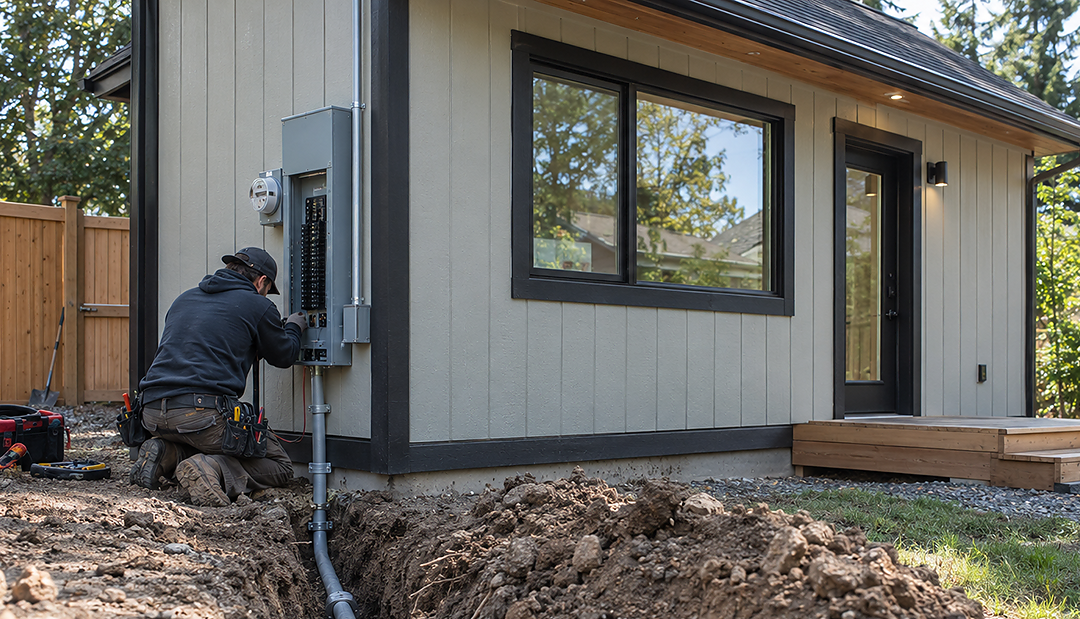
Electrical for a backyard suite in Calgary is a project in its own right, separate from the house it sits behind. The City of Calgary also calls these garden suites, carriage houses, and laneway houses, and they always require permits, with the electrical work following its own permit and its own inspection sequence. This post covers how the suite gets its power, what the load calculation decides, and how the trench and wiring are inspected.
The Permits Behind The Electrical
A backyard suite needs a development permit and a building permit, and the electrical work runs on its own: the City describes a separate electrical permit, pulled by an electrical contractor, to hook up the service to the suite. A homeowner’s permit can then be pulled for the wiring of the suite, so an owner who qualifies can do that part personally. The City’s homeowner permit rules still exclude work on the main service and load calculations, which a qualified electrician must complete, and electrical contractors cannot work under a homeowner permit. Our residential electrical permits post covers the wider permit rules, and our permit and inspection guide explains how inspections are booked.
How The Suite Gets Its Power
The City treats the service connection as its own step under that electrical permit, and it asks a registered electrical contractor to confirm the home’s electrical capacity before the permit is applied for. Its load calculation form for a house with a backyard suite adds a rule that shapes the design: the service panelboard and branch circuits from the house’s panel must not be connected to outlets or equipment in the suite. That points to the suite having its own panelboard, with the way it is fed settled by the load calculation and by what the existing service can support. When the main service has to be increased from 60, 100, or 200 amps, the contractor contacts ENMAX, so that conversation belongs at the start of planning. Our 100 amp versus 200 amp comparison and panel upgrade service page cover what a larger service involves.
What The Load Calculation Decides
For a single family dwelling with a backyard suite, the City uses a form built on Rule 8-200(2) of the Canadian Electrical Code, which treats the house and the suite as separate dwelling units. Each unit gets a basic load based on its living area, and electric space heating, the range, water heaters and hot tubs, and EV charging are added according to the code. The form then applies a diversity step in which the unit with the heaviest load counts in full and the next unit counts at 65 percent, with electric space heating and air conditioning handled separately from those percentages. The result is compared with the existing service.
If the numbers are tight, the City’s electrification guidance gives two options: upgrade the service, asking the electrician to contact ENMAX, or install an energy management system that shares the available electricity among appliances. The City asks for a model that is ULC certified or City-accepted and installed by a qualified electrical professional. Our load management service and load shedding devices post explain how those systems work.
Trenching, Rough In, And Inspections
A detached suite needs a feeder run across the yard, and the City’s inspection requirements address that directly. Rough and underground inspections should be combined, and the trench should be exposed on at least one end so the depth can be confirmed. Inside the suite, all wiring and the interior of outlet boxes must be visible at rough in, and insulation, vapour barrier, and drywall cannot go over any work that requires inspection before it is concealed. The final inspection comes once devices, receptacles, and fixtures are installed and the breaker directory is labelled, and drywall does not have to be in place for that visit. Planning the trench route before the garage slab, landscaping, or fencing is finished avoids digging the same ground twice.
Choices Inside The Suite That Change The Load
Electric heat, a range, a water heater, a hot tub, or an EV charger each change the calculation, and the same choices change what else the suite needs. If gas appliances are planned, the City requires a separate gas permit pulled by a licensed gas fitter, and a separate mechanical permit pulled by a licensed HVAC contractor covers the heating and ventilation. Deciding early whether the suite will be all electric or will use gas for the range or water heater shapes the service size, the permits, and the budget, which is why those decisions belong in the first conversation with the electrician and not after the framing is up.
Reach out to schedule a service review and load calculation for your suite, and we will map the electrical plan before the permits are filed. We work across Calgary, and you can contact the team here.
by Talisee Carpenter | Oct 5, 2026 | Hot Tub & Spa Electrical Connections
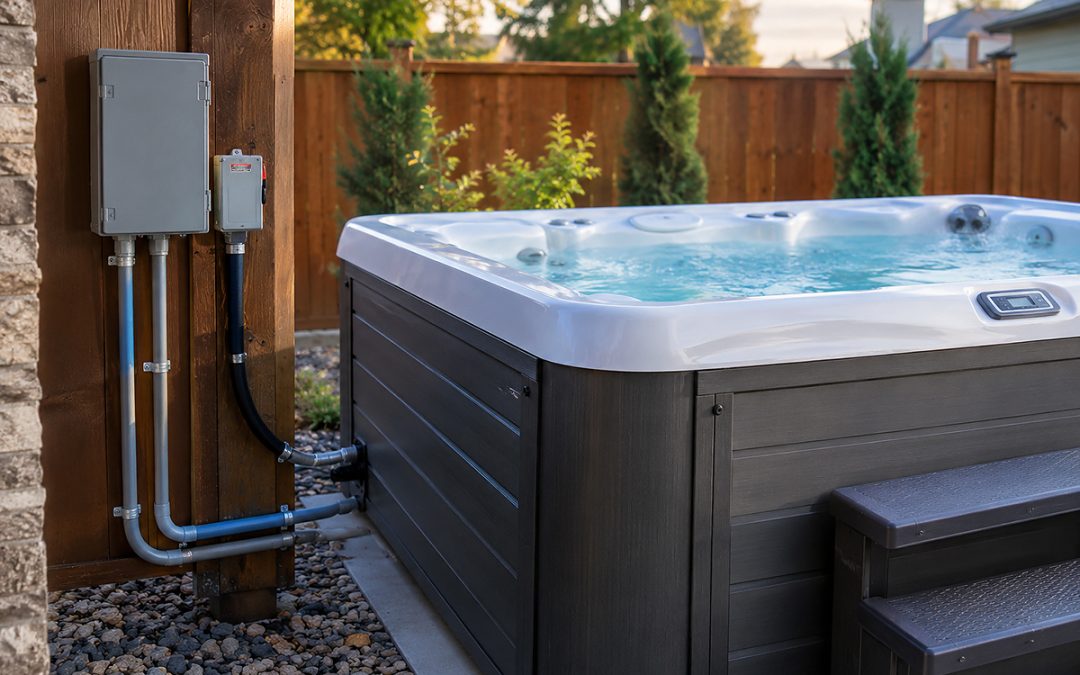
Whether you need a permit for a hot tub in Calgary depends on the wiring, not on the tub. The City of Calgary requires an electrical permit for all new wiring installations and for extending or altering existing branch circuit wiring, so the real question is whether the tub needs a new or altered circuit to run. This post covers the permit and inspection side only. Circuit sizing, bonding, and GFCI details are in our hot tub electrical requirements post.
What Triggers An Electrical Permit
A hardwired 240 volt tub typically needs a new dedicated circuit from the panel, following the manufacturer’s specifications, and that circuit requires a permit before work starts. A smaller 120 volt plug-in tub is different. If it plugs into an existing outlet that already meets code, no new wiring is installed and a permit may not be triggered. The condition is the word existing: when the outlet is not on a suitable circuit, or a new outlet has to be run, the work becomes new wiring and the permit applies. Rather than assume either way, confirm with an electrician before delivery, since the manufacturer’s electrical requirements decide what the circuit must provide.
Who Can Pull The Permit
In Calgary the person doing the work is the person who pulls the permit, because the City does not allow a permit to be pulled on behalf of whoever is doing the work. A certified electrical contractor applies for the permit for contractor installed work, and the City does not allow electrical contractors to work under a homeowner permit. A homeowner can apply for a homeowner electrical permit on a home they own and live in, but the City limits what that permit covers. Its list of work homeowners may not do includes installing electrical wiring in permanent, in-ground swimming pools and hot tubs, work on the main panel or meter base, and load calculations, which a qualified electrician must complete.
A hot tub retailer or a general contractor who is not a certified electrical contractor cannot pull the permit for you, even when the electrical work is included in a package price. Ask who holds the permit before a delivery date is set, and see our permits and warranty FAQ for the questions we hear most often.
From Permit To Final Inspection
Once the permit is issued, the inspector’s visits follow the work. Where wiring will be concealed or buried, it has to be visible for inspection before it is covered, and a final inspection follows when the connection is complete and the breaker is labelled. The tub should not be wired in until the permit exists and the inspector has seen what needs to be seen. How long this takes depends on the City’s review and inspection availability, so build in a buffer instead of booking delivery for the day after the wiring. Our permit and inspection guide walks through booking and preparing for the visit, and our residential electrical permits post covers the wider permit rules.
Portable And Built In Tubs
A portable tub on a deck or pad and a built in spa share the same permit trigger, which is new wiring. The practical difference is the installation. A built in or in-ground spa usually involves buried cable and bonding to the surrounding structure, and it falls under the homeowner exclusion described above, so that work goes to a licensed contractor. For a freestanding tub, choosing between cord and plug and a hardwired connection changes what the electrician installs, but not whether new wiring needs a permit: a plug-in tub still needs a compliant outlet on a suitable circuit, and that is new wiring if it does not already exist.
What Happens When The Work Was Never Permitted
Permits can still be obtained after the work is finished, but concealed wiring changes the process. When wiring has been covered without proper permits, the City will not issue a homeowner permit for it. The owner must hire a licensed electrical contractor, who obtains the electrical permit and checks that the wiring complies with the code, and the City notes that the inspector may ask for drywall to be removed to complete the inspection. The homeowner remains responsible for wiring that was concealed earlier, so confirming that the permit exists before a tub is wired in avoids that situation.
Schedule with us for a hot tub electrical assessment before the tub is ordered, and the permit, the circuit, and the inspections will be lined up before delivery day. Our hot tub electrical connections service covers homeowners across Calgary, and you can reach the team here.
by Talisee Carpenter | Sep 28, 2026 | Panel & Service Upgrades
You have the drawings, the contractor, and the timeline, and then somebody asks whether the panel can handle it. A panel upgrade for a basement development in Calgary is one of those questions best answered before the framing goes up rather than after, since the wrong answer can stall a project or force a rebuild later. Whether you actually need one depends on your current panel and what the finished space is going to run.
Why Basements Add More Load Than People Think
A finished basement is not just extra square footage, it is extra electrical demand, often more than owners realize. A basement development typically adds new lighting circuits, outlets, and often a bathroom, a wet bar, a laundry rework, or a home theatre setup, and any of those alone would be manageable. Stacked together, especially in an older home like those in Elbow Park with a panel that was sized decades ago, they can push a system past where it should be running.
What to Check Before You Break Ground
The first question is simply how much room your panel has right now, both in physical breaker slots and in total capacity. A panel that is already full has nowhere to add the new basement circuits, and a service that is close to its limit cannot safely take on much more load. An honest look at both before construction starts saves the frustration of finding out mid-project that the plan will not fit the equipment.
When an Upgrade Makes Sense
Not every basement development needs a panel upgrade, but some genuinely do, and knowing which category you fall into is the whole point of the check. A modern panel with room to spare is often fine, while an older or crowded panel usually is not, and the deciding factor is what the finished basement is asking of it. Our overview of basement electrical work walks through how that decision gets made.
Or Whether Load Management Solves It
Before jumping to a full upgrade, it is worth asking whether smarter coordination could open enough room within your existing service. Modern load management can spread out big loads so they take turns rather than all drawing at once, which sometimes creates the headroom a basement development needs without touching the incoming service. It is not always the right answer, but it is often worth considering before committing to a bigger project.
Doing the Upgrade at the Right Moment
If an upgrade is genuinely needed, timing matters, and doing it at the start of the basement development is far cleaner than trying to add it later. The panel is out in the open, the walls are not yet closed up, and the electrician can plan the new basement circuits into the upgraded panel from day one. That sequencing is what turns a two-project headache into a single coordinated job.
Get an Answer Before You Start
Knowing whether your panel needs an upgrade should be a first-week question in any basement development, not a last-week surprise. If you are planning a basement build in Calgary and want a straight answer about your service, reach out to Crew Technical Services to book a panel assessment, and we can tell you exactly what your project needs.
by Talisee Carpenter | Sep 23, 2026 | Panel & Service Upgrades
Every Calgary driver knows the ritual of the cord hanging out of the grille and the hunt for somewhere to plug in on a bitter morning. A properly installed block heater plug in Calgary makes that routine simple and safe, giving you a reliable outdoor outlet built to handle winter rather than a shared cord run out a window. It sounds like a small job, and it is, but doing it right matters more than people expect once you factor in cold, moisture, and safety.
Why Calgary Homes Need One
Calgary winters are hard on vehicles, and a block heater keeps an engine warm enough to start easily and run cleaner on the coldest days. To use one, you need a dependable outdoor outlet within reach of where you park, whether that is a driveway, a carport, or the side of the garage. A dedicated plug beats stringing an extension cord out a door or window every night, which is both a hassle and a hazard.
More Than Just an Outdoor Outlet
Adding a block heater plug is not quite as simple as sticking any outlet on an exterior wall. The outlet has to be rated for outdoor use, sealed against snow and moisture, and wired on a circuit that can handle the load without borrowing capacity from something else. Done properly, it becomes a permanent, weatherproof fixture rather than a seasonal workaround, and it is the kind of outdoor work our team handles as part of outdoor power installation.
Why GFCI Protection Is a Must
An outdoor outlet lives in exactly the conditions that make ground fault protection essential, surrounded by snow, ice, and meltwater all winter long. Ground fault protection cuts power instantly if moisture causes a fault, which is what keeps a wet outdoor plug from becoming a shock hazard. This is not an optional upgrade but a code requirement for outdoor outlets, and our look at GFCI and AFCI protection explains why it matters so much.
Timers and Convenience Add-Ons
A block heater does not need to run all night to do its job, which is where a timer earns its place. Wiring the plug through a timer means the heater switches on a few hours before you leave rather than burning power from dusk to dawn, which trims the cost of using it through a long winter. It is a small addition at installation time that pays off every cold month.
Placing the Plug Where It Works
Location is worth a moment of thought before the outlet goes in, since the plug should sit within easy reach of where the vehicle actually parks. Mounting it at a sensible height, clear of where snow piles up, keeps it usable even in the depths of winter. Planning that placement is a quick conversation that makes the finished plug genuinely convenient rather than an awkward stretch every morning.
Get It Wired Before the Cold Hits
A block heater plug is one of the more practical winter upgrades a Calgary home can have, and it is far easier to install before the first deep freeze than during it. If you want a safe, weatherproof outdoor outlet for your vehicle in Evanston or anywhere in Calgary, reach out to Crew Technical Services to book an outdoor outlet installation and beat the cold.