
A winter outage in Calgary is a different problem from a summer one, because the furnace stops along with everything else. Choosing a standby vs portable generator in Calgary comes down to how automatically the backup needs to respond, how many circuits it must carry, and how much a household is willing to manage while the power is out. Our Calgary home generator guide gives the overview, and this post goes further into the practical differences.
Which Outage Are You Planning For?
Start with the outage instead of the equipment. A few hours without power on a mild evening asks little of a generator, and a portable unit can keep a refrigerator and a few lights running. An overnight outage in deep cold raises the stakes, because the furnace has to run and nobody wants to be refuelling a machine at two in the morning. A multi day outage is where the two options separate most, since fuel, attention, and noise all accumulate. Decide which of those situations you are really preparing for, and much of the comparison settles itself.
How Each Type Connects To The House
A portable generator reaches the house through a generator inlet and either an interlock kit or a manual transfer switch at the panel, or it runs individual appliances directly by cord. An interlock mechanically prevents the main breaker and the generator breaker from being on together, and a manual transfer switch moves a chosen group of circuits onto the generator. Either way, the rule is firm: never feed power into house wiring without an interlock or a transfer switch, because backfeed can energize utility lines and injure the crews working on them.
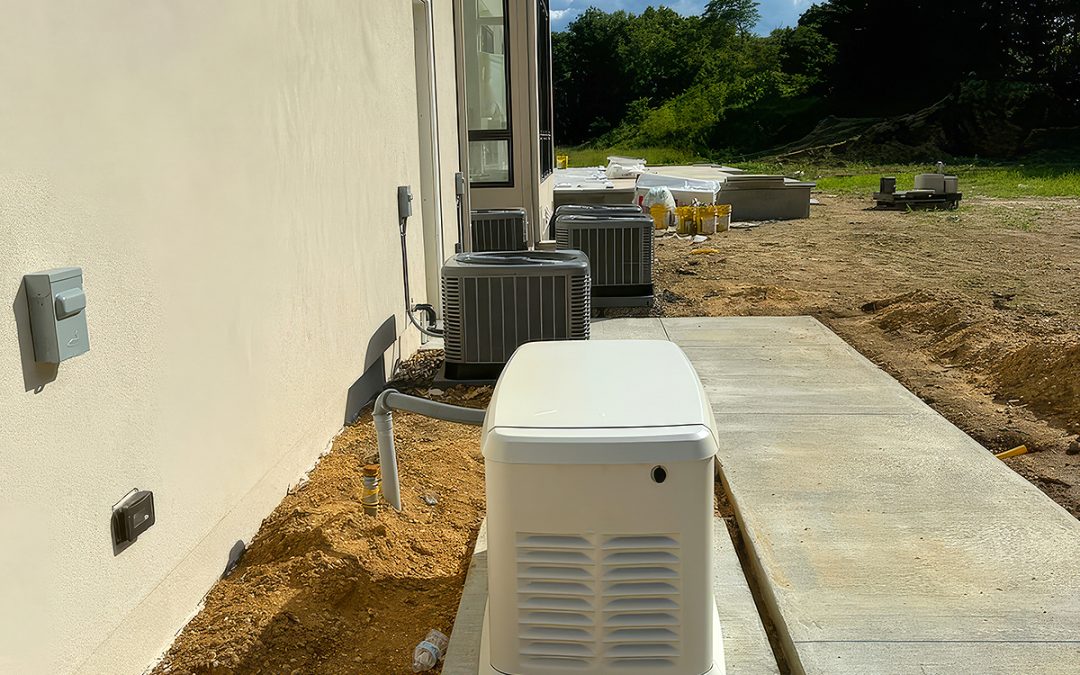
Placement matters just as much. Never run a portable generator in a garage or near windows, doors, or vents, because the exhaust carries carbon monoxide, and a working carbon monoxide alarm in the house is the only way to detect it. A standby generator avoids that handling because it is installed permanently outside with an automatic transfer switch that senses the outage, starts the unit, and moves selected circuits over within seconds. That installation involves a pad, a gas or propane connection, and permitted and inspected electrical and gas work, and our standby generator installation page covers it for Calgary homes.
Fuel, Cold Starts, And Supply In A Calgary Winter
Fuel is where the two options diverge most over a long outage. A standby unit on natural gas draws from the same service line as the furnace, so it keeps running without refuelling, while a propane unit depends on tank size, which should leave reserve for a multi day outage. A portable unit runs on gasoline, which means storing fuel, refuelling every few hours under a real load, and letting the unit cool before each refill.
Cold weather adds its own requirements. Starting an engine at deep winter temperatures is harder, so the manufacturer’s cold weather requirements for the specific model are part of the specification, and a portable unit has to be carried out and started in the conditions it is meant to cover. Calgary winters swing between deep cold and chinook warm spells with strong winds, and either can interrupt power, so our post on generator sizing and what to power first applies to winter just as directly as it does to spring.
Noise, Maintenance, And Day To Day Use
A standby generator runs a short self-test on a set schedule and is otherwise silent until needed, and it is serviced on a schedule much like a furnace. A portable unit is considerably louder while running, and its upkeep falls to the owner: storing fuel properly, running the unit periodically, and keeping it in working order between outages that may be months or years apart. Households that rent or plan to move within a few years sometimes choose portable for that reason alone, while owners settled in a long term property usually see standby as the better investment.
Sizing Either Option Correctly
Both types need to be sized against an actual load calculation, not a guess from square footage. The calculation decides which circuits the generator carries: usually the furnace, sump pump, refrigeration, and some lighting, and sometimes a well pump, while an electric range, dryer, or central air conditioner may need load shedding or a larger unit. A standby unit that is too small sheds circuits it should carry, and an oversized one costs more than the house demands. Our load management service ties directly into this, since the same calculation that sets panel capacity also decides what a generator must cover.
Our Lake Bonavista generator installation post looks at standby sizing in an established community, and our generators FAQ answers the sizing and installation questions we hear most often.
Choosing Between The Two
A portable generator suits occasional, short term backup on a smaller budget for a household that can be home to run it. A standby generator suits a household that wants the furnace and sump pump covered automatically no matter who is home. Homeowners across Calgary can contact us for a generator sizing consultation, and we will use the home’s load calculation to match the option to how the house is used.