by Talisee Carpenter | Oct 21, 2026 | Generator Installation
Planning a backup generator in Okotoks starts with a short list of what the household cannot lose when the power fails, usually the furnace, sump pump, refrigeration, and, on properties with private wells, the well pump. The right unit, and whether it is standby or portable, follows from that list. Okotoks also has its own mix of housing, with an older downtown core, newer subdivisions around it, and acreages nearby, and each has different needs.
What Is Different About Power In Okotoks
Power in Okotoks is delivered over FortisAlberta’s distribution network, while ENMAX serves Calgary, so an outage in one does not automatically mean an outage in the other. A backup plan modelled on how Calgary outages behave therefore does not transfer directly. The useful local question is simpler: what does this particular household need to keep running, and for how long.
Older Downtown Homes And Newer Subdivisions
An older home near the downtown core may have a service that was never upgraded for a modern electrical load, so a panel assessment often comes before generator sizing. A home in one of the newer subdivisions usually has more panel capacity to begin with, which moves the conversation toward which circuits matter most during an outage instead of whether the panel can support a generator at all. Our Okotoks hot tub circuit work covers similar capacity questions that come up across the town.
What A Real Backup Power Plan Covers
A backup plan begins with a load calculation that identifies the circuits that matter most. In an Okotoks winter that list usually starts with the furnace, since a gas furnace still needs electricity for its blower and controls, followed by the sump pump, refrigeration, key lighting, and any medical equipment a household member depends on. Writing that list before shopping for a unit often shows that a smaller, more affordable system covers what matters.
From there, the choice between a standby unit that starts automatically and a portable unit set up by hand depends on how the home is used. Our Calgary home generator guide compares the two, our standby generator installation page covers sizing and installation, and our post on what to power first during an outage helps rank the circuits.
Wells And Acreages Near Town
A private well changes what the household counts as essential. When the power fails the pump stops, and with it the water for drinking, flushing, and any livestock, so the pump belongs on the priority list next to the furnace. The decisions that follow are practical: whether the pump runs on the generator all the time or only at set times, and whether anything else tied to the water supply, such as a treatment system, needs power as well. Those answers shape the load calculation, which sizes the unit around what the household will actually run.
What A Site Visit Covers
An in person assessment covers the panel, the service entrance, the planned generator location, and, on properties with a well, the pump and its wiring. Each of those changes the final sizing and installation plan, which is why a phone estimate alone rarely produces a number worth relying on. The visit is most useful before a specific model has been chosen from an online search, since sizing sometimes changes which model makes sense for the property.
Planning Before The Next Cold Snap
Sizing a unit, confirming panel capacity, and scheduling the installation all take time that is easier to find before the cold arrives than during it, and installation scheduling tightens once the first serious cold snap of the winter hits. Our generators FAQ answers the most common sizing and timeline questions. Contact us to book a backup power assessment well ahead of the season.
by Talisee Carpenter | Oct 12, 2026 | Generator Installation
A winter outage in Calgary is a different problem from a summer one, because the furnace stops along with everything else. Choosing a standby vs portable generator in Calgary comes down to how automatically the backup needs to respond, how many circuits it must carry, and how much a household is willing to manage while the power is out. Our Calgary home generator guide gives the overview, and this post goes further into the practical differences.
Which Outage Are You Planning For?
Start with the outage instead of the equipment. A few hours without power on a mild evening asks little of a generator, and a portable unit can keep a refrigerator and a few lights running. An overnight outage in deep cold raises the stakes, because the furnace has to run and nobody wants to be refuelling a machine at two in the morning. A multi day outage is where the two options separate most, since fuel, attention, and noise all accumulate. Decide which of those situations you are really preparing for, and much of the comparison settles itself.
How Each Type Connects To The House
A portable generator reaches the house through a generator inlet and either an interlock kit or a manual transfer switch at the panel, or it runs individual appliances directly by cord. An interlock mechanically prevents the main breaker and the generator breaker from being on together, and a manual transfer switch moves a chosen group of circuits onto the generator. Either way, the rule is firm: never feed power into house wiring without an interlock or a transfer switch, because backfeed can energize utility lines and injure the crews working on them.
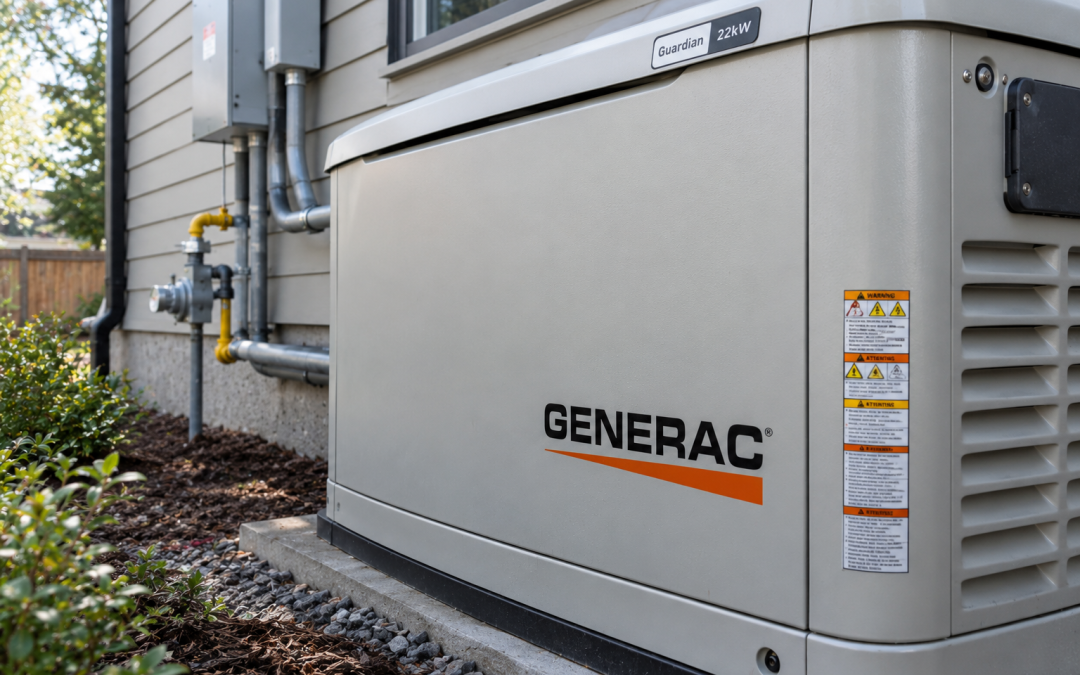
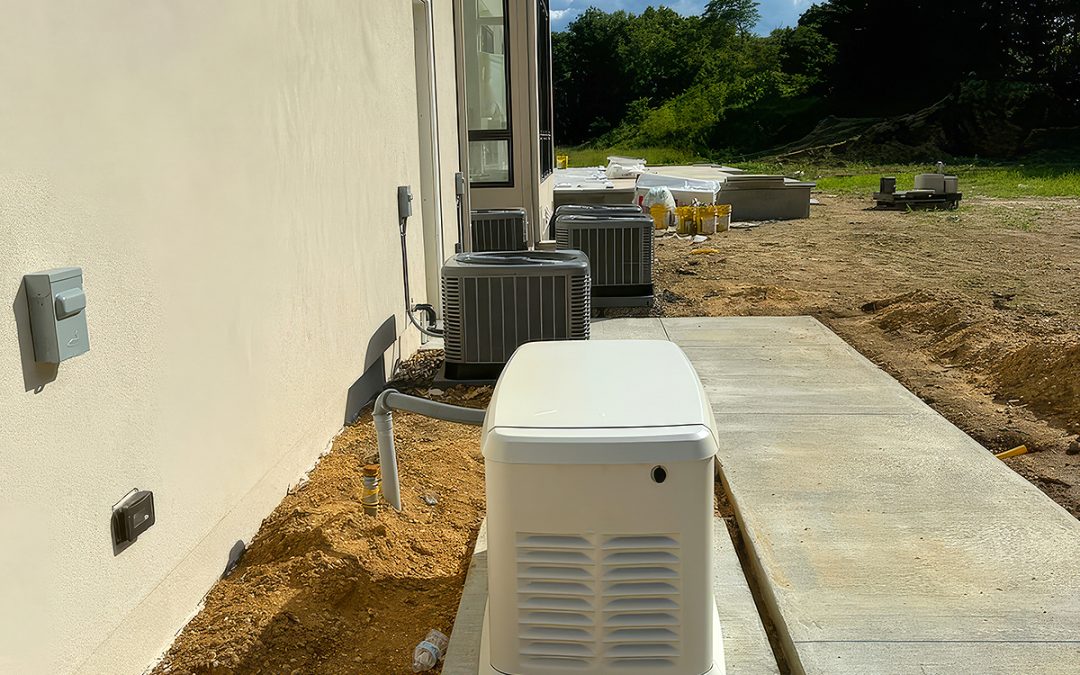
Placement matters just as much. Never run a portable generator in a garage or near windows, doors, or vents, because the exhaust carries carbon monoxide, and a working carbon monoxide alarm in the house is the only way to detect it. A standby generator avoids that handling because it is installed permanently outside with an automatic transfer switch that senses the outage, starts the unit, and moves selected circuits over within seconds. That installation involves a pad, a gas or propane connection, and permitted and inspected electrical and gas work, and our standby generator installation page covers it for Calgary homes.
Fuel, Cold Starts, And Supply In A Calgary Winter
Fuel is where the two options diverge most over a long outage. A standby unit on natural gas draws from the same service line as the furnace, so it keeps running without refuelling, while a propane unit depends on tank size, which should leave reserve for a multi day outage. A portable unit runs on gasoline, which means storing fuel, refuelling every few hours under a real load, and letting the unit cool before each refill.
Cold weather adds its own requirements. Starting an engine at deep winter temperatures is harder, so the manufacturer’s cold weather requirements for the specific model are part of the specification, and a portable unit has to be carried out and started in the conditions it is meant to cover. Calgary winters swing between deep cold and chinook warm spells with strong winds, and either can interrupt power, so our post on generator sizing and what to power first applies to winter just as directly as it does to spring.
Noise, Maintenance, And Day To Day Use
A standby generator runs a short self-test on a set schedule and is otherwise silent until needed, and it is serviced on a schedule much like a furnace. A portable unit is considerably louder while running, and its upkeep falls to the owner: storing fuel properly, running the unit periodically, and keeping it in working order between outages that may be months or years apart. Households that rent or plan to move within a few years sometimes choose portable for that reason alone, while owners settled in a long term property usually see standby as the better investment.
Sizing Either Option Correctly
Both types need to be sized against an actual load calculation, not a guess from square footage. The calculation decides which circuits the generator carries: usually the furnace, sump pump, refrigeration, and some lighting, and sometimes a well pump, while an electric range, dryer, or central air conditioner may need load shedding or a larger unit. A standby unit that is too small sheds circuits it should carry, and an oversized one costs more than the house demands. Our load management service ties directly into this, since the same calculation that sets panel capacity also decides what a generator must cover.
Our Lake Bonavista generator installation post looks at standby sizing in an established community, and our generators FAQ answers the sizing and installation questions we hear most often.
Choosing Between The Two
A portable generator suits occasional, short term backup on a smaller budget for a household that can be home to run it. A standby generator suits a household that wants the furnace and sump pump covered automatically no matter who is home. Homeowners across Calgary can contact us for a generator sizing consultation, and we will use the home’s load calculation to match the option to how the house is used.
by Talisee Carpenter | Aug 31, 2026 | Generator Installation
It usually happens on the worst possible night. A spring storm rolls through, the power drops, and somewhere in a Lake Bonavista basement a sump pump goes quiet while water keeps rising. A standby generator in Lake Bonavista exists for exactly that moment, keeping the furnace, the fridge, and the pump alive while the rest of the block waits in the dark. In Calgary’s original lake community, where homes are established and lots are large, a long outage is rarely just an inconvenience.
What a Long Outage Really Costs Here
Lake Bonavista has been settled since the late 1960s, and the homes reflect that history with finished basements, mature landscaping, and owners who have often lived there for years. A flooded basement from a stalled sump pump can undo decades of care in a single night, and a furnace that dies during a cold snap turns a comfortable home into a frozen one within hours. The value of backup power shows up precisely when the stakes are highest, which is why so many established homes eventually decide it is worth having.
How the System Responds on Its Own
The appeal of a standby generator is that it asks nothing of you when the power fails. It constantly watches the incoming supply, and the instant the grid drops it starts up and carries the load within seconds, so the outage becomes a brief flicker rather than a blackout. When utility power returns, it hands the load back and powers down on its own, ready for the next time. Our overview of home generators in Calgary walks through how that automatic cycle comes together.
Sizing It to Your Household
The single most important decision in a generator project is the size, because a unit that is too small cannot carry what you need and one that is too large is money spent for nothing. Getting it right starts with a simple question of what must keep running during an outage, whether that is only the essentials or nearly the whole house. Mapping those critical loads is the same thinking behind our look at what to power first, and it is what makes the finished system match the way your household actually lives.
The Transfer Switch Does the Quiet Work
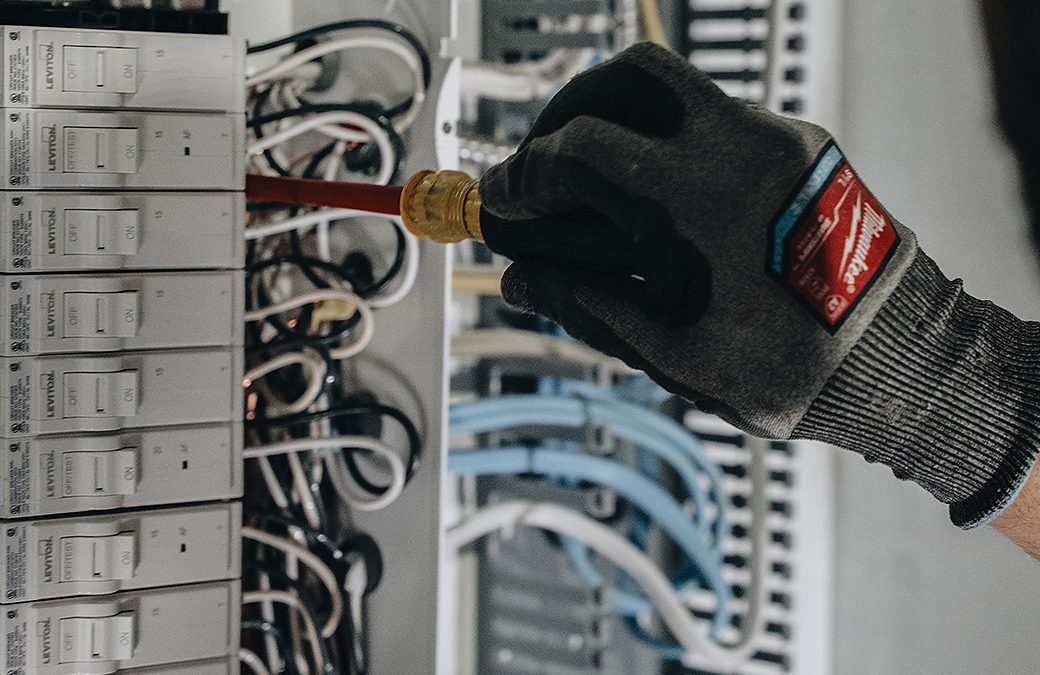
None of this works safely without a transfer switch, the device that manages the handoff between grid and generator power. It keeps the two sources separated, which protects your home and, just as importantly, prevents generator power from feeding back onto the utility lines where crews are working to restore service. Because the generator draws on your home’s capacity, this is also a natural moment to look at your load management so everything runs together cleanly.
Keeping It Ready for the Next Storm
A generator only earns its keep if it starts when called on, and that means a little routine care. Standby units need periodic testing and servicing, since one that has sat untouched for years is a gamble on the exact night it matters most. Folding that upkeep into a regular schedule keeps the unit dependable without adding anything to your list, so the next storm is met with a quiet hum instead of a scramble.
Book a Generator Assessment in Lake Bonavista
For an established home, a standby generator often pays for itself the first time it prevents a flooded basement or a frozen night. If you own a home in Lake Bonavista and want reliable backup power, reach out to Crew Technical Services to book a generator assessment, and we can size the right solution for your home.